I love jeopardy, but it frustrates me when I get the answers wrong. One of the things I noticed when I was playing this is I NEED TO STUDY CHAPTER 17 AND GET THOSE DETAILS DOWN IN MY HEAD! I did not know much about the European stuff, information. Chapters about India and Islam were the easiest for me; I do not know how I understand them so well, but I guess there are certain things which you would understand easily and others you would not. Also, in China, I kept on messing up the emporers of Sui and Tang and Song dynasties. Another thing was dealing with the Post Classical India, the different states in the Southeast Asia; I do not know how to memorize the names - I guess I'm just gonna have to READ and READ MORE UNTIL I GET IT!!
P.S. the game really helped me with the review; it made me realize what I need to work on and what I need to read and focus on. I think we should do this more often because it really did help me.
Monday, December 19, 2011

Friday, December 16, 2011
"Not to love much or excessive laughter!!!" :)) oopps my bad
Focus Questions 4 and 5:
4. Monasteries that kept to Benedict's RULE could be very useful in institutions, because all monasteries now decided by this Benedict's Rule, since before, they were not so unified. Deciding public affairs by this Rule means people who were following these rules were scared and threatened because if they do something wrong, or commit a crime, it would mean it's against their religion. It's a good thing in a way where no one is committing a crime or lying; I guess it did not last very long seeing the modern day crimes. Anyways, since many people might have been following all these rules, it might have helped out with less people creating crimes because of the population. As Benedict's Rules stated "not to be proud" or "not to steal" or "to relieve the poor" - as many more, these all rules helped with the society.
5. In the terms of social and economic structure, if many people were in the monasteries, and following these rules, first of all, they were scardy cats! Secondly, the people must have been poor since Europe was recovering from the fall of the Roman Empire. In social structure, of course, the monasteries had these strict Benedict's Rules which people followed.
4. Monasteries that kept to Benedict's RULE could be very useful in institutions, because all monasteries now decided by this Benedict's Rule, since before, they were not so unified. Deciding public affairs by this Rule means people who were following these rules were scared and threatened because if they do something wrong, or commit a crime, it would mean it's against their religion. It's a good thing in a way where no one is committing a crime or lying; I guess it did not last very long seeing the modern day crimes. Anyways, since many people might have been following all these rules, it might have helped out with less people creating crimes because of the population. As Benedict's Rules stated "not to be proud" or "not to steal" or "to relieve the poor" - as many more, these all rules helped with the society.
5. In the terms of social and economic structure, if many people were in the monasteries, and following these rules, first of all, they were scardy cats! Secondly, the people must have been poor since Europe was recovering from the fall of the Roman Empire. In social structure, of course, the monasteries had these strict Benedict's Rules which people followed.
Tuesday, December 6, 2011
Goddly poems
The poems of the Bhakti Movement do represent Indian Society. For example, the poems are more focused on believing in God(s) and also, the poems describe the caste system. The idea of God is represented in all the poems which does represent the Indian society, but the distinction between Hinduism and Islam is present as well. Since its Bhakti Movement, the people were trying to decrease that distinction.
I did like the poems, but the only concern I have is the translation of them. I think the translations ruined the meanings of the poems and those translataions are not accurate.
I did like the poems, but the only concern I have is the translation of them. I think the translations ruined the meanings of the poems and those translataions are not accurate.
Sunday, November 27, 2011
Poems?? nahh.. boring!
First of all, I am not a big fan of poetry. They just don't seem to interest me for some reason! Lets just say, I suck at understanding the poems, I mean why can't people just write in a simpler paragraph way rather than making it complicated in few lines. I see no point of that. Anyways, since I am not a big fan of poems, of course, I did not enjoy these poems. Both of the poems sort of had a reflection of nature like the idea of Daoism. Tang talks more about the relationships between the humans. Yes, I do believe that these poems reflect both societies well. We can probably use these poems to understand any society because they mention about nature of human and also the nature of 'nature'.
Tuesday, November 15, 2011
My awesome Show of the spread of Islam
So, the assignment was to show/demonstrate the expansion of Islam up to a certain dynasty known as Abbasid dynasty, which started about around 751 C.E. Before that was the Umayyad dynasty and the early Caliphs (around 632-733 C.E.). In order to show the expension, I basically made a wonderful showme for those who are interested in getting some knowledge about Islam and oh, of course interested in my awesome show show showme! So here it is:
The Expansion of Islam
Hope you enjoyed it!
The Expansion of Islam
Hope you enjoyed it!
Sunday, November 13, 2011
Conversions of Russians vs Byzantines.. lets see who's more accurate!
Constantine was a Roman general who wanted to be a Roman emperor. He considered himself to have a power of the Christian God because he believed that the Christian God helped him to handle his rivals and to become a Roman Emperor. He promulgated the Edict of Milan which allowed the Christians to practice their faith openly in the Roman Empire. After then, he converted himself to Christianity. Vladimir was a prince of Kiev who converted to Orthodox Christianity. He already held a higher position, so it was different than Constantine. Vladimir didn't like other religions due to certain reasons such as Islam. He didn't like Islam because he would have to give up on alcohol and certain meat such as pork. There were other religions which he could've converted into, but he didn't. I think Constantine's conversion had more meaning towards religion behind it rather than Vladimir's conversion. Pretty much, converting into Christianity brought them closer but they converted for different reasons.
Byzantine Empire's Awesome-ness
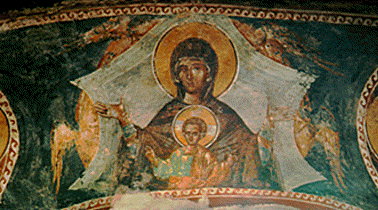 |
| Painting - Virgin Mary Praying |
 |
| Dome Mosaic - Christ Central |
Well, the Byzantine architecture and the paintings sort of share the similar color themes - the architecture was more of in brownish and reddish shades while the paintings had more of yellowish into them. Both has the feeling of warmness due to the choices of the warm colors. Red, yellow, brown, purple reflect the warm feelings. There isn't much representation of the cold colors such as blue or green. I did not think it is distinctive. The architecture served more as functional rather than decorative, because well, there isn't much pattern/details in the architecture like how the Persians did. Also, it looked simple and definitely doesn't look like decorated at all. I did not see any influences on the American architecture except the Byzantine interiors were decorated well inside with the bright colors, which is sort of how it is up here as well.
Tuesday, November 8, 2011
Hey Constantinople, you forgot your documents..
Document 1 is from Benjamin of Tudela, a Rabbi, who pretty much gives an overview of the city, Constantinople. May be the document is just giving an overview information about the city to the others. Since Benjamin was a Rabbi, he talks about the places of worship and about the king - King Manuel.
Document 2 is from Robert of Clari, who talks about how the city was conquered and taken over. He also talks about pilgrims reacting to the city. Robert describes the different parts of the city. I think this document was written for the public in general - describing more of the city.
 Document 3 is from Nicetas Choniates and talks about the statue of Hercules, and the barbarians. Technically, the barbarians did not like the beauty of the city and 'did not neglect to overturn the statues standing in the Hippodrome or any other marvelous works". I think this document talks about the history of the city to teach others.
Document 4 is the map of Constantinople - painted map from the 13th century. Since it was painted, I think it was created by some famous artist in the city. May be it was painted for the travelers or merchants who were travelling all the times just to guide them about the city.
Document 5 is a photograph of an Interior of a church - Saint Sophia. I think this was photographed to promote the culture, may be religion! It has to be taken by a modern photographer because there weren't cameras back in days.
Document 6 is from George Acropolites, who may be have been a servant of the emperor since the document mostly focuses on the emperor. I think the document was written for the people to get more knowledge of the king, especially the citizens of the city.
Document 7 is from Chrysobull Detailing, who might have been a historian since it gives information. Even though the document does not seem so real and factual, I think it was directed towards the people in general.
Document 2 is from Robert of Clari, who talks about how the city was conquered and taken over. He also talks about pilgrims reacting to the city. Robert describes the different parts of the city. I think this document was written for the public in general - describing more of the city.
Document 4 is the map of Constantinople - painted map from the 13th century. Since it was painted, I think it was created by some famous artist in the city. May be it was painted for the travelers or merchants who were travelling all the times just to guide them about the city.
Document 5 is a photograph of an Interior of a church - Saint Sophia. I think this was photographed to promote the culture, may be religion! It has to be taken by a modern photographer because there weren't cameras back in days.
Document 6 is from George Acropolites, who may be have been a servant of the emperor since the document mostly focuses on the emperor. I think the document was written for the people to get more knowledge of the king, especially the citizens of the city.
Document 7 is from Chrysobull Detailing, who might have been a historian since it gives information. Even though the document does not seem so real and factual, I think it was directed towards the people in general.
Tuesday, November 1, 2011
The Route of Treasures...
Actually, almost everything went well in this silk road project! I loved working with my partner, Helly! Hmm, three things that went well would be, of course, the poster itself went pretty well, umm, I think we did well on the essay too and also, over all the time management which we had planned, worked out. There were few things I didn't like such as drawing the map was a pain; I'm an artist still I don't like to draw maps - especially maps on these kind of large posters. Since I like things to be perfect, I wanted my map to be perfect and I tried my best. Helly and I were half way done with the map and we realized that we have to include empires, which kind of annoyed me so much! So of course, reading the directions was definitely an issue! Also, Helly and I were working on this over the weekend as in on Saturday - Saturday evening; as soon as we opened the Google document for the instructions, the power went out. So we had a hard time with the map as well as the essay. There wasn't any difficulty in this project other than just making sure we were coloring the right empires and drawing the right/correct roads. My partner was a great help! Helly and I did everything together; we both helped each other out, so it wasn't like one person doing all the work and other one is just chilling! Overall, the collaboration was 5 out of 5 between us two.
If I were to do this differently, I don't think I would change anything other than just drawing the map technique - meaning I think you should project the map on the white board and we can just trace it. Other than that, I actually liked this project and I learned more than I would've by reading because when I draw things like locate them on the map, it just sticks in my head for some reason and I just remember it very well rather than reading. Just to let you know, I am not a reading person overall, so I enjoy doing this more than reading except it's time consuming and it sucks when you don't have power!
If I were to do this differently, I don't think I would change anything other than just drawing the map technique - meaning I think you should project the map on the white board and we can just trace it. Other than that, I actually liked this project and I learned more than I would've by reading because when I draw things like locate them on the map, it just sticks in my head for some reason and I just remember it very well rather than reading. Just to let you know, I am not a reading person overall, so I enjoy doing this more than reading except it's time consuming and it sucks when you don't have power!
Wednesday, October 19, 2011
Great! Another Sources from the Past... Jesus' teachings vs others' views

- Jesus vs Hindu: Hindu basically rewarded to the people who followed religious morals and people who lived religiously. Jesus' moral also states that a person can be rewarded to heaven by living religiously.
- Jesus vs Zoroastrianism: Both ask for honesty in life! The difference is monotheistic vs polytheistic
- Jesus vs Confucianism: Confucianism is all about being perfect and respecting others; Jesus is not about being perfect but the moral is similar of treating others with respect.
- Jesus vs Daoism: Both of them are same as Confucianism - Daoism is about being one with nature, which I don't think Jesus preached but they both also believed in being nice with others.
- Jesus vs Buddhism: Help the Poor! Jesus' teachings attracted the lower caste just like in Buddhism.
- Jesus vs Socrates: Same as Confucianism again - being honest, being good to others, neighbors, etc!
Monday, October 17, 2011
Hmm.. So Why Do Empires Form?
The Empires form because of the ruler's desire. Especially when it comes to the conqueror, he always wants to have a bigger kingdom for economic opportunities, for more land, for spreading out his culture, more population - more people to follow his order. Empires require a strong leader otherwise it ends up dividing among themselves. All empires start off with a small kingdoms and then a strong leader just jumps in and thinks 'Oh hey, may be I should conquer a little bit' and guess what, slowly the kingdom's size doubles... triples and turns into an empire.
 During the classical era, there were many empires being formed due to small kingdoms/dynasties and people wanted more power. One of the example is the Qin Dynasty; during the Period of the Warren States, the state of Qin dominated its neighbors and imposed centralized imperial rule throughout China. Meanwhile, on the other side - southern Asia, India's kingdom had already started to form. The kingdom of Magadha was located in the central portion of the Ganges plain. It remained as a kingdom for few years until Chandragupta Maurya came in, and began by seizing control of small, remote regions of Magadha and worked his way towards central India. He eventually ends up forming this small kingdom of Magadha into the Mauryan Empire. In Europe, Julius Caesar basically led to an end of the Roman Republic and the foundation of the Roman Empire started by Augustus.
During the classical era, there were many empires being formed due to small kingdoms/dynasties and people wanted more power. One of the example is the Qin Dynasty; during the Period of the Warren States, the state of Qin dominated its neighbors and imposed centralized imperial rule throughout China. Meanwhile, on the other side - southern Asia, India's kingdom had already started to form. The kingdom of Magadha was located in the central portion of the Ganges plain. It remained as a kingdom for few years until Chandragupta Maurya came in, and began by seizing control of small, remote regions of Magadha and worked his way towards central India. He eventually ends up forming this small kingdom of Magadha into the Mauryan Empire. In Europe, Julius Caesar basically led to an end of the Roman Republic and the foundation of the Roman Empire started by Augustus.
¿Not sure how you turned into an Empire?
# 1. The Roman Twelve Tables:
The Roman Twelve Tables basically states that whatever crime you committ, you get equally punished for it; they had specific rules just like the other empires did.
#2. The Murder of Tiberius Gracchus:
Tiberius was trying to explain to people about their rights of defending their own lands. (71) People didn't understand him and he was murdered by the Roman Senate - Senators.
#3. Roman Empire Maps:
In 146 B.C., Roman Republic was spread throughout the Southern Europe and within few years, the size almost trippled which was in 117 CE.
#4.
Caesar conquered the land, but his own people killed him. The killing of Caesar led to Augustus rulling. Due to the rulling of Augustus, the Roman Republic turned into a monarchy possessing a great power.
The Roman Twelve Tables basically states that whatever crime you committ, you get equally punished for it; they had specific rules just like the other empires did.
#2. The Murder of Tiberius Gracchus:
Tiberius was trying to explain to people about their rights of defending their own lands. (71) People didn't understand him and he was murdered by the Roman Senate - Senators.
#3. Roman Empire Maps:
In 146 B.C., Roman Republic was spread throughout the Southern Europe and within few years, the size almost trippled which was in 117 CE.
#4.
Caesar conquered the land, but his own people killed him. The killing of Caesar led to Augustus rulling. Due to the rulling of Augustus, the Roman Republic turned into a monarchy possessing a great power.
Saturday, October 15, 2011
WiKi Vs TeXt

 I personally prefer the textbooks over Wikipedia. There are few reasons:
1. Only few people have written the textbook, in contrast, on Wikipedia, anyone could edit anything.
2. I know the person who has written the textbook, I know the editor of the text book; meanwhile, on Wikipedia, I don't know who wrote it - which makes it unreliable.
3. Since anyone could edit the information posted on Wikipedia, the research is not provided properly. The textbook is more organized and has factual information due to the information of the author, and editors, etc.
Overall, Wikipedia is a good source, but the information is not reliable, due to everyone's access to editing the page. I agree that Wikipedia's got great pictures on some research, and it does a great job with certain topics, but I wouldn't prefer using Wikipedia to learn something in class. I prefer the textbook, because it's neatly organized, very well descriptive and filled with important facts - which in Wikipedia, there is just way too much information which is sometimes useless/unnecessary for teaching or for knowing.
Wednesday, October 12, 2011
Bhagavad Gita, Zoroastrianism, and Confucianism - Sources from the PaSt!!

Another thing about Bhagavad Gita is, it talks about everyone having their own routes - due to people's different thinking and no body is on the same road as you are. In contrast, Zoroastrianism and Confucianism do not share this idea; they both believe that people are on the same road, people think alike, etc.
Thursday, October 6, 2011
¡Blog Corrections!

On the scale of three, I would give between 1 or 2 to overall results/blog posts I've checked. The reason for it is some people are not spending enough time and others are to post the blog. I don't think student should get a zero for doing the blog, as long as they talk about the topic of the question rather than writing some random post down. Yes, that student would get a zero if they talk about something completely off of the question which was asked. I don't think students should access other students' posts, because everyone thinks differently and they could disagree with the comment; on the otherside, with the teacher, he knows better ane you can't argue much.
Sunday, October 2, 2011
Confucius on Leadership...
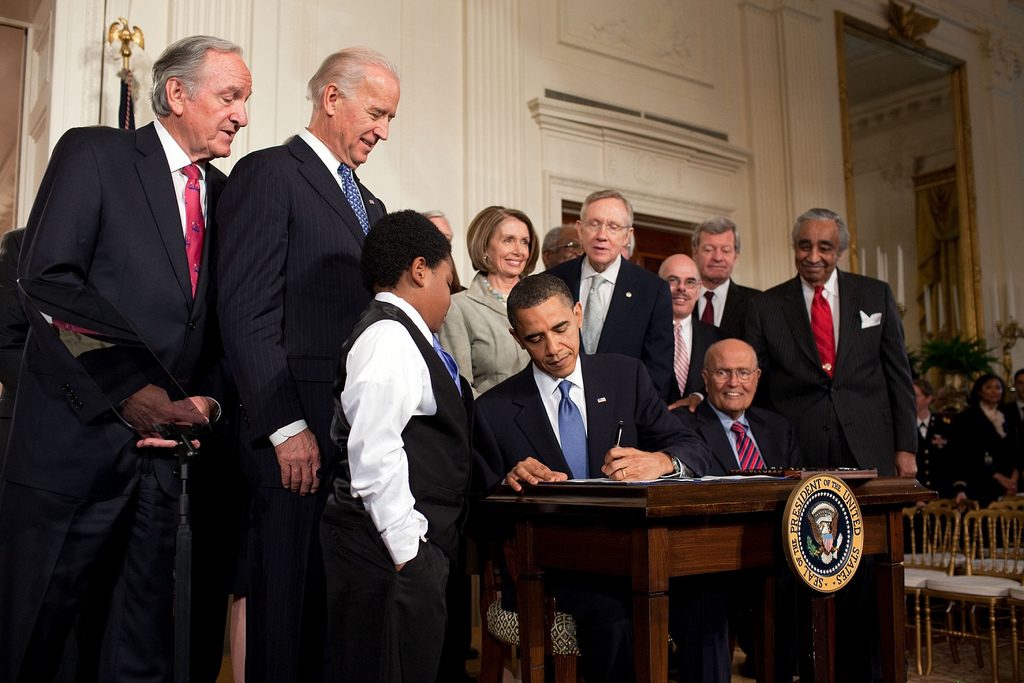 Confucius answered in The Analects - Book XII. 14, "Over daily routine do not show weariness, and when there is action to be taken, give of your best" when Tzu-chang asked about the government. Recently, the US's president, Barack Obama, had proposed the healthcare reform bill, which was nearly impossible to get passed by the Congress. When he became the president in 2008, he first proposed his plan of the Healthcare system in July, 2009. The Senate didn't pass the healthcare bill until March, 2010. Overall, the President gave his best to pass the bill, which was a success after a year. According to Confucius, the daily routines don't determine whether you are not a good politician, but when the action needs to be taken in certain situations, and it becomes successful proves that you are a good politician and worthy of governing.
 Wednesday, September 28, 2011
Alexander The Great
Alexander The Great was just an extraordinary person. He decides to conquer the Persian Empire to just to take a revenge on the Persians - due to their harsh behaviors with the Greeks. To seek his revenge, he starts to travel into the Persian Empire, conquering each and every places. In fact, he ended up destorying the Persian capital - Persopolis; he burns the palace as well as the city. Alexander was very harsh with the people in the Persian Empire, due to his revenge. Before Alexander could kill Darius, the Persian King, he was already found dead, murdered by Besus, who was Persian. According to Alexander, this was a betrayal to the king, so he went after Besus. Over all, Alexander did everything, conquered the whole Persian Empire due to revenge, which is normal, there were many conflicts in ancient world in which the kings would take revenge on each other.
Alexander should be called The Great, because he conquered the whole Persian Empire, which was not an easy job. The Persian Empire extended from the Mediterranean to Northern India, which was consisted of the Royal Road, canals, gardens, etc. Alexander wanted to conquere India as well which he would have if he had not gotten hurt by an arrow in the battle - which made him retreat his troops.
Alexander should be called The Great, because he conquered the whole Persian Empire, which was not an easy job. The Persian Empire extended from the Mediterranean to Northern India, which was consisted of the Royal Road, canals, gardens, etc. Alexander wanted to conquere India as well which he would have if he had not gotten hurt by an arrow in the battle - which made him retreat his troops.
Subscribe to:
Comments (Atom)